
Blog

Agricultural Supply Chain Management in India: The Role of Warehousing, Procurement, and Technology

Agricultural Supply Chain Management in India

Introduction to Agriculture Supply Chain Management

Agricultural Supply Chain Management plays an important role in modern agriculture. It encompasses procurement, storage, quality tests, financing and distribution. A sound system ensures the commodities are delivered quickly from the farms to the market undeterred by quality losses.

SLCM understands that effective supply chain systems can minimize post-harvest losses and increase operational efficiency. The organization has witnessed a rising demand for facilities providing organized agri-logistics, driving a Phygital integration that provides farmers, processors, and markets with real-time scalability to meet global demand.

Importance of Efficient Agriculture Supply Chain Systems

Agriculture supply chains have faced issues such as fragmented networks with multiple intermediaries, which reduce farmer margins and limit transparency. Inadequate storage, limited visibility, and inefficient procurement systems further impact operations. Dependence on manual processes leads to errors, delays, and lack of traceability, while restricted access to formal financing often forces stakeholders to rely on informal channels. These challenges impact commodity quality and delay timely access to markets. Structured supply chain systems help address these gaps through defined processes and standardisation. They enable better handling, improved traceability, and consistent quality across the supply chain. With large volumes of commodities managed across multiple locations, organised systems become essential. Technology-enabled logistics networks further support visibility, coordination, and efficient movement of commodities at scale.

Role of Warehousing in Agriculture Supply Chain Management

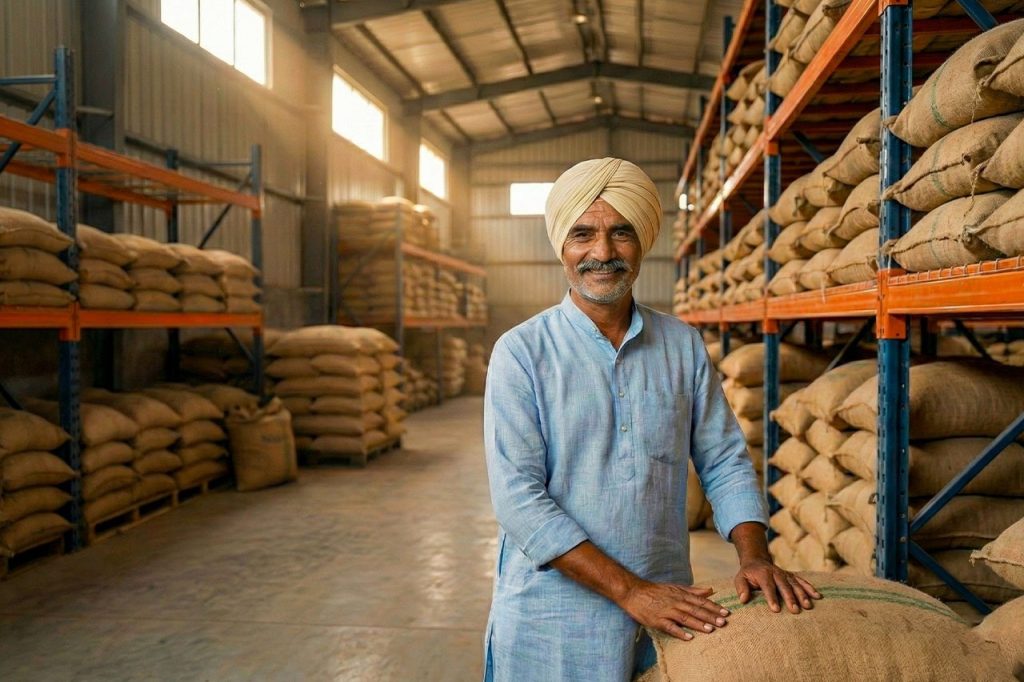
Warehousing is an integral component of agriculture supply chain management. Warehouses, supported by structured warehouse management processes, ensure commodities are stored scientifically after harvest and handled efficiently before distribution. SLCM provides various warehousing options: Professional Warehousing, Exchange Warehousing; Warehouse Management Systems (WMS); PEG Warehousing Services, Warehousing for Organic Products, and Warehousing for Horticulture.

  • Professional Warehousing: SLCM manages complete warehouse operations by offering storage space on lease or long-term arrangements, along with defined processes for handling and storing commodities.
  • Exchange Warehousing: This service is designed for commodities traded on exchanges, where commodities are stored in SLCM warehouses under agreed terms with commodity exchanges.
  • Warehouse Management Services (WMS): SLCM provides end-to-end warehouse management for client-owned or leased warehouses, including stock management and operational support.
  • Preservation, Enhancement & Grading (PEG): SLCM offers value-added services to preserve commodity quality, enhance its market value, and ensure proper grading based on defined quality parameters.
  • Warehousing for Organic Products: Specialised storage solutions are provided for organic commodities, with processes aligned to maintain product integrity without standard fumigation. SLCM also uses Cocoon Fumigation to control insects and humidity without chemicals, ensuring safe storage for medium to long durations.
  • Warehousing for Horticulture: SLCM provides specialised storage solutions for horticulture commodities through its cold storage network. With real-time monitoring of temperature, humidity, and commodity quality, it helps reduce post-harvest losses and ensures proper handling of perishable produce.

Warehouses can support product quality, manage inventories and maintain the proper storage conditions for the products. The extensive network allows for greater ease of transport and handling of large volumes of commodities.

Procurement as a Critical Link in the Agriculture Supply Chain

The procurement process provides the link for the farming community, mandis, buyers and traders. Establishing an effective process for ensuring appropriate methods of sourcing and handling during the initial stages will allow for an efficient flow of commodities through to consumers.

At SLCM through our procurement operations, we conduct business throughout local and regional mandi networks, in multiple states to develop a strong agricultural ecosystem that benefits all stakeholders and allows for efficient sourcing of products, such as grains, pulses, spices, cotton and oilseeds.

By implementing a collaborative approach, we are creating an efficient and transparent supply chain that ensures end-to-end traceability and grade-standardization for every commodity across our network.

Technology and Digitization in Modern Agriculture Supply Chains

Supply Chain operations are changing due to technological advancements. The usage of digital platforms and integrated systems within SLCM enables management of operations in a more efficient manner.

By leveraging the Agri-Reach platform, we provide 24/7 visibility, automated quality inspections, and geo-fenced monitoring regardless of the warehouse location

Technology-based platforms also connect various stakeholders in the supply chain, thereby providing for better co-ordination and control.

Risk Management and Quality Assurance in Agriculture Supply Chains

Mitigating risk is an important factor in agriculture supply chain management; SLCM employs structured processes such as internal audits, inspections, and continuous monitoring to effectively manage and mitigate risks across the supply chain.

By utilizing advanced analytical laboratories to test commodities for quality and to ensure compliance with established testing standards, SLCM has been able to implement monitoring systems to monitor moisture content, storage condition, and overall quality of commodity.

Strong risk management practices are instrumental in building trust and providing a reliable agricultural ecosystem.

Final Thought

An efficient agricultural supply chain consists of warehousing, procurement, and technology. Integrated systems increase the quality, transparency, and operational control of an agricultural supply chain. For more information about how SLCM is changing the way logistics are handled in agriculture through its integrated solutions, visit the SLCM website where you will find additional information about the services provided.

agriculture supply chain management means managing how products move between farms and markets by ensuring that there are structured processes (systems) at each step of the supply chain.

Warehousing ensures that products will remain safe, have consistent quality, allow for easy handling of products to/from warehouses.

Procurement is the liaison between the farmer, the mandi, and the buyer for structured and recognizable sourcing.

It enables improved tracking of products in real-time, more effective coordination of transportation arrangements, and faster decisions are driven by real-time data analytics and edge computing at the warehouse level.

SLCM conducts audits, inspections and laboratory testing of products.

Risk management protects the quality of the product and promotes trust within the supply chain.
Understanding Agriculture Supply Chain Management and Its Growing Significance

Agriculture Supply Chain

Agriculture is the mainstay of India, but the journey from harvest to market is still complicated, fragmented, and extremely vulnerable to waste. An efficient system needs to be coordinated and technology-enabled. This efficiency is supported by a Phygital approach, where physical processes are enhanced through digital oversight to maintain reliability at every step. This is where agriculture supply chain management comes into play. At SLCM, we have built a singular solution to ensure that commodities flow through storage, processing, financing, and delivery seamlessly and with accountability.

Defining Agriculture Supply Chain Management

Agriculture supply chain management encompasses every activity that links a farm to a consumer, including handling, warehousing, quality inspection, procurement, and collateral management, among others. Each quotation that doesn’t flow creates a loss of value and availability. SLCM plays a critical role throughout the commodity chain, ensuring that it is safe, of high quality, and traceable. With pan-India operations managing over 1200+ different types of commodities in India, we support every agri-stakeholder from farmers to millers, processors, traders, and banks.

Significance of Warehouse Management Companies

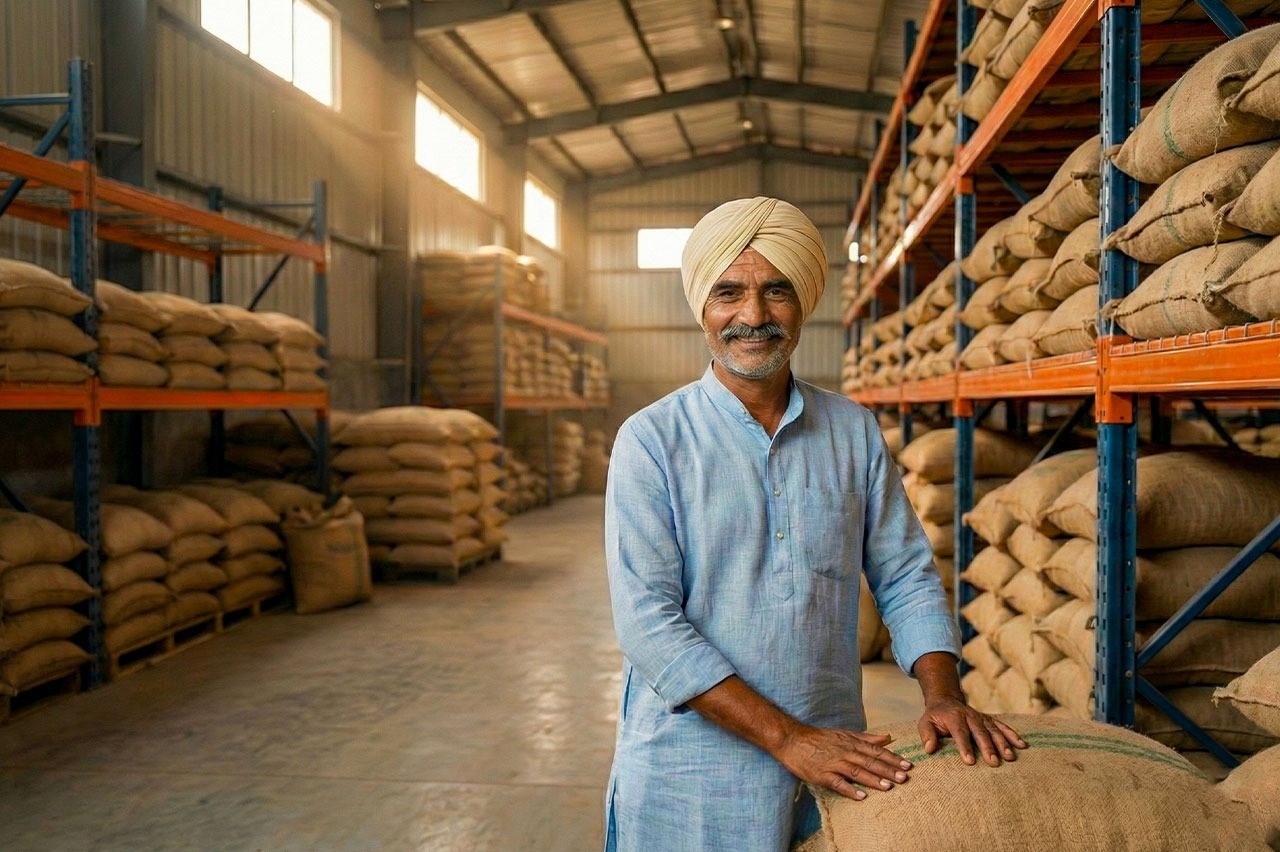
Post-harvest wastage remains a critical issue for the agricultural economy. For commodities, without scientific storage and tracking, they will lose market value. Companies managing warehouses like SLCM provide stability for the system through secure and technologically managed storage facilities. SLCM has over 21,000 warehouses in its network (as on October 2025), managing storage capacity greater than 350 million square feet, so at any time across India, we are able to offer consistency with quality and safety throughout.

Real-time tracking, surveillance, and strong operational controls can help maintain the right conditions within the warehouse. Thus, warehouse management companies can support the integrity of the supply chain and reduce the financial risk for producers and buyers.

Quality Assurance and Traceability

The value of any commodity depends on its quality and condition. Warehouse management systems provide transparency and trust in their transactions. SLCM deploys AI powered quality testing in real-time that provide immediate reports and NABL accredited laboratory support to verify the quality of stock stored in their warehouses. This process empowers farmers with price negotiation, provides pricing transparency, market acceptance, and builds greater confidence in the time of producers and buyers in agricultural supply chain management.

Establishing Financial Empowerment with Collateral Management

Agriculture has a critical demand for timely capital, and when crops are properly stored and tracked accurately, they can become a non-volatile source of collateral. SLCM helps to facilitate access to finance through a digitized storage receipt. A storage receipt issued by SLCM serves as verified proof that the commodity is physically present in the warehouse, allowing it to be used as secure collateral for financing. This provides farmers, aggregators, and traders access to the value of their commodities. Our collateral management services are a critical utility in developing the agri-economy and elevating liquidity wherever needed.

A Network That Connects Access and Scale

India’s agricultural markets are vast and diverse in product. Generating seamless execution involves having the retailer geographically covered with clearly defined processes. With operations across 950-plus mandis and a deep regional infrastructure in access and operations, SLCM fulfills proximity and convenience to the agri-retailer ecosystem.

The Role of Technology in Progress

We have innovation in line with the physical. Smart analytics and digital oversight complete risk forecasting, maximize utility, and enable complete visibility. SLCM operates through a Phygital model, combining physical infrastructure with digital intelligence to deliver better speed, accuracy, and traceability across the agri-value chain. SLCM incorporates technology into agri-logistics and finance with a set of professionalism and responsiveness that distinguishes it as unique. 

The Role of a Strong Agricultural Supply Chain

Supply chains that support a strong agricultural future are resilient, connected, and inclusive. An effective agriculture supply chain management system enables food security, equitable pricing, waste reduction, and enhanced income opportunities. Sustainability solutions support our endeavor to build systems that optimize productivity, thereby enabling growth for a connected and integrated agriculture value chain. Our expertise, infrastructure, and digital capabilities generate trust from the farm gate to the final buyer.

Final Thoughts

The agricultural ecosystem is dynamic, and so is the outlook from each of the participants. Organizations that seek to understand the complete journey of commodities and provide integrated solutions to drive real value to the agriculture ecosystem must exist. SLCM is the unrivaled leader in India, having demonstrated outcomes, operational excellence, driven by a mission to support, uplift, and empower the agricultural economy in India.

Connect With Us

If you are looking for help in storage, procurement, or logistics with a firm that understands this sector really well, SLCM would love to partner with you. Allow us to bring your supply chain together to make your business grow confidently.

Q1. What is agricultural supply chain management?

A1. Agricultural supply chain management refers to the coordinated movement, storage, processing, and delivery of agricultural commodities from the farm to end consumers by maintaining quality and traceability.

Q2. Why is agricultural supply chain management important?

A2. Agricultural supply chain management helps reduce post-harvest losses, improve pricing, support food security, and farmers' and traders' profitability.

Q3. What role do warehouse management companies play in agriculture?

A3. Warehouse management companies provide scientific storage of crops, operational control, and protection of inventory. This is an integral part of maintaining quality and value through the chain.

Q4. In what ways does SLCM help farmers and traders?

A4. Warehouse, quality testing, procurement services, and collateral management services that will provide better market access and economic empowerment.

Q5. In what ways does technology improve the agricultural supply chain?

A5. Digital monitoring, quality checks, AI-based, and data-driven operations improve accuracy, predict risk, and positively impact decision-making.

Q6. Can proper supply chain management facilitate greater financial liquidity?

A6.Yes. Secure warehouse storage and sets of documented inventory can help facilitate financing against stored commodities.