Blog

How SLCM Delivers Reliable Agri Warehousing Services in India with Technology-Driven Solutions

How SLCM Delivers Reliable Agri Warehousing Services in India with Technology-Driven Solutions

The Evolving Need for Agriculture Warehousing Services in India

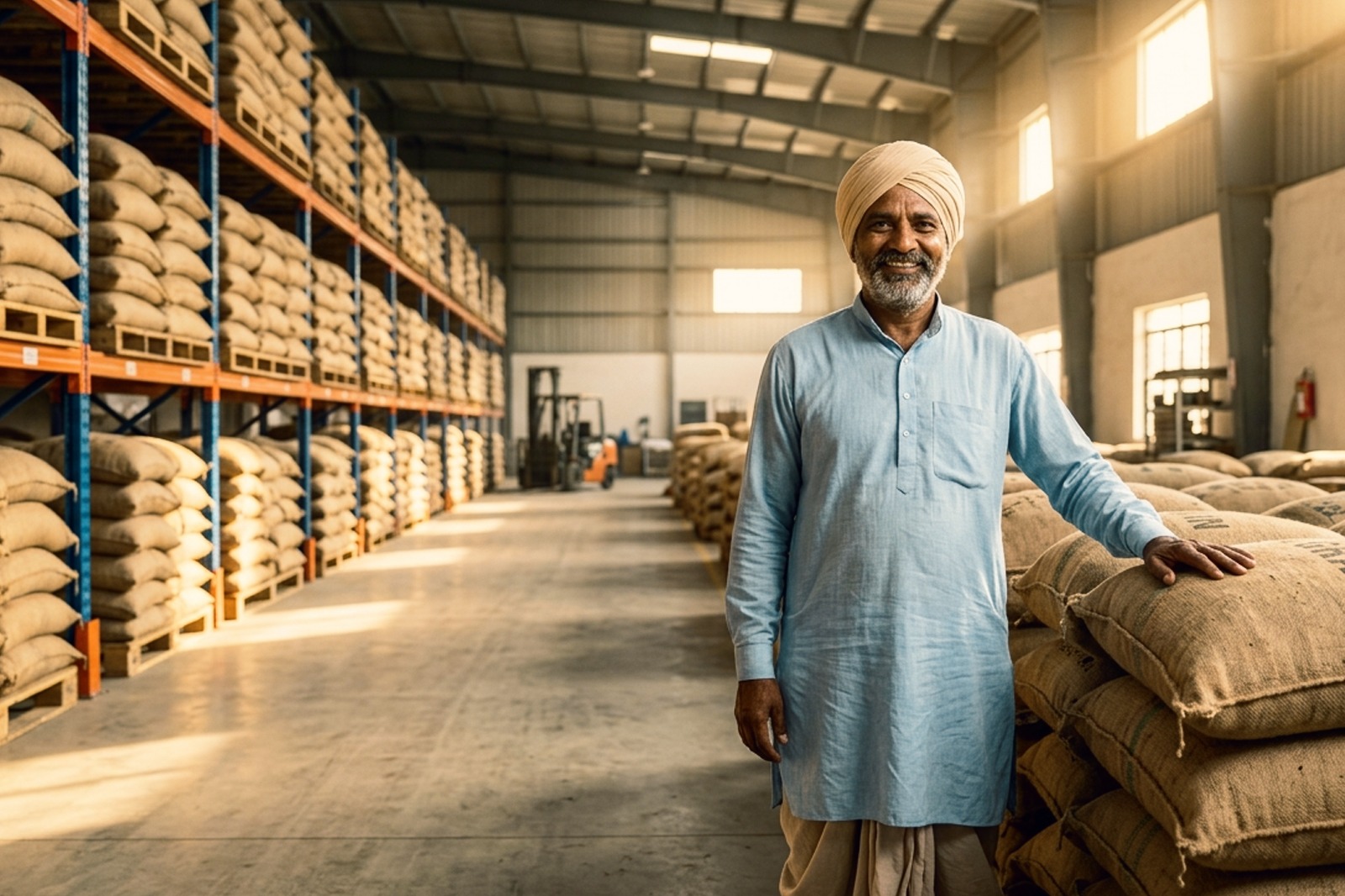
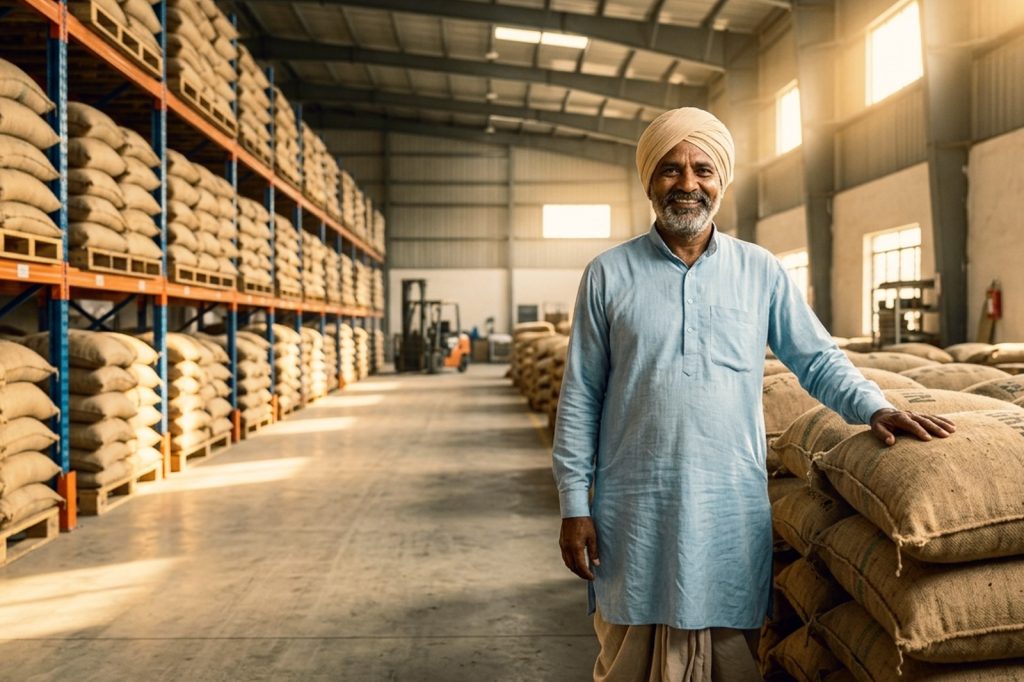
We often assume that agriculture ends once the crops are harvested. Once crops are harvested, they should be stored properly to maintain their quality. However, an efficient Warehousing Services in India will also help to improve a crop’s market value. A local storage company can help you maintain the quality of your grain until it is sold. The appropriate storage will decrease loss, maintain quality, and ensure there is no interruption in the agricultural supply chain.

Unfortunately, the majority of standard warehousing processes have gaps and are unable to deliver the required service. First, the lack of any standardization can impede the transparency that must be maintained. Secondly, inadequate oversight of quality control can lead to loss of merchant and farmers confidence in the quality of their products on the market.

Sohan Lal Commodity Management’s progress on addressing these gaps through a systematic and phygital approach has provided tangible and reliable solutions that assist in instilling real confidence into both farmers and merchants in their commodity at every level of the supply chain. Our goal is to provide farmers and merchants with true visibility and control at every stage of the storage process.

Integrated Warehousing with Pan-India Reach

Our comprehensive warehousing services go beyond storage to provide total support for the entire post-harvest life cycle of the commodity, from the time the commodity enters the warehouse until the time it is dispatched. Our operation spans across the country, enabling us to service any agricultural commodity in a uniform manner. This allows us to combine high volume with consistency in delivery. We integrate warehousing with broader agri supply chain processes to ensure efficient and seamless operations across locations.

Phygital -Driven Warehouse and Risk Management Systems

Our Warehousing Services in India are managed by a phygital approach that integrates physical operations with technology.  We use Phygital Platforms for commodity tracking, warehouse operations, reporting and managing risk at each stage of commodity management. The Agri Reach application will enhance this process as well. It has been built to be operational regardless of the types of infrastructure, commodities and/or weather dynamics that may exist. Having real-time visibility allows for stakeholders to remain clear about the operation of the warehouse and the delivery of products to the customers while simultaneously having it incorporated with risk monitoring so that issues can be identified and managed early in the procurement process. This reduces the reliance on human labor for monitoring and increases the accuracy of the information.

Scientific Storage with Standardised Processes

Discipline and best practice are essential to maintaining the quality of a commodity. Scientific storage techniques provide a means to preserve value during the storage period. The quality of commodities is monitored regularly through inspection and grading. Across all of our warehouses, fumigation, pest management , moisture control, round-the-clock surveillance with CCTV cameras and GPS-enabled locks and proper stacking practice are consistently applied.

What makes us unique is our adoption of uniformity in all of our warehouses. Each warehouse follows the same procedure so that the result is the same, no matter where the commodity is stored. Over time, this level of uniformity provides a great deal of reliability.

Collateral Management and Financial Enablement

A warehouse should not only serve as a storage location for goods. A warehouse can also assist you with the process of obtaining funding through collateral management services. Our business model is integrated and provides collateral management services that help to release value from the commodities that you have stored.

The commodities that you have stored can be used to attract funding as an alternative source of liquidity when you need them. By doing this, it will alleviate your need to sell at inappropriate times because of a lack of liquidity.

Our processes are both field-proven and transparent; they provide confidence to the financial institutions that are interested in using warehousing as a mechanism to provide financial support. Thus, warehousing provides not only operational support but also financial support.

Setting New Standards for Warehousing Services in India

The integration of technology, scientific storage methods, and standardized risk management processes into one system gives Sohan Lal Commodity Management the capability to provide Warehousing Services in India that are reliable, transparent, and scalable. Due to growth within the agricultural sector, there will be a corresponding increase in the need for reliable warehousing service as well. Consistent execution and continuous improvement are our foundation.

If you are looking for an organization that knows how to manage commodities with precision while providing superior service, we are here to support you with your warehousing needs. Visit our website today!

What makes Sohan Lal Commodity Management’s warehousing services reliable?

The integration of technology, scientific storage, and standardization promotes reliability and consistency.

Technology allows for real time tracking, reduces human error, and improves monitoring and reporting.

Agri Reach provides warehouse management capabilities for various types of commodities across geographies under a unified system.

Farmers/Traders are able to use stored commodities as collateral for financial services, which provides them with an added level of liquidity and flexibility.

Yes! We manage commodities consistently through every location across India.

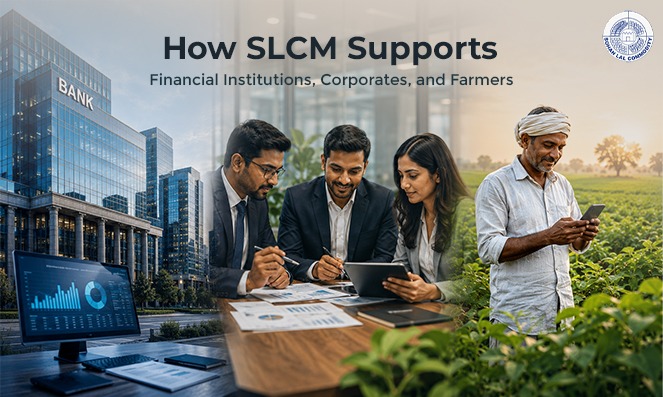
How SLCM Supports Financial Institutions, Corporates, and Farmers

How SLCM Supports Financial Institutions, Corporates, and Farmers.

Why End-to-End Warehouse Solutions Matter

The post-harvest agricultural sector of India struggles with issues such as inadequate storage, commodity loss, unreliable monitoring, and price fluctuation. Due to a lack of effective warehousing systems, fragmented storage is limiting agricultural commodities’ quality and access to organized financing. The provision of integrated Warehouse Solutions would subsequently enhance all agricultural value chain processes: efficiency, transparency, and operational trust.

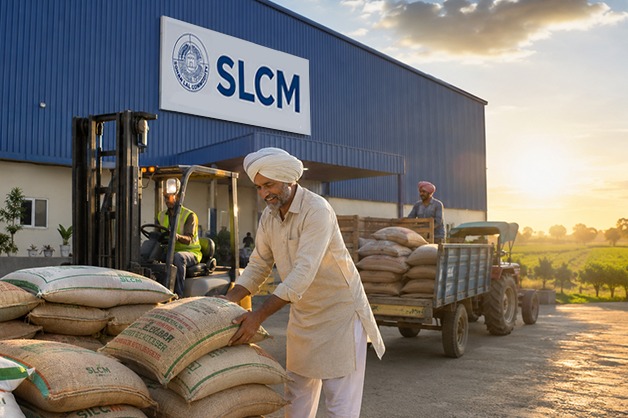
Sohan Lal Commodity Management Limited plays an important role in supporting India’s agricultural supply chain through its wide post-harvest agri-logistics network. The company helps store and manage a variety of agricultural commodities with care by using scientific warehousing practices and technology-enabled monitoring systems. Our strong warehousing and cold storage infrastructure is designed to help maintain product quality, improve efficiency, and support smooth movement of goods across the supply chain.

End-to-End Commodity Management Across the Value Chain

SLCM has one cohesive operational system that manages all processes associated with procurement, storing, tracking, and quality control of commodities, management of collateral, movement of commodities, reducing gaps, and increasing consistency in the operation of its warehouses.

By implementing scientific storage techniques, including management of moisture content, application of fumigants, efficient stacking, and monitoring via surveillance cameras and GPS-enabled e-locks with periodic inspections, preserves quality and quantity of commodities during storage. The use of standard operating procedures by all warehouses establishes operational discipline and ensures safe handling of commodities.

SLCM’s proprietary Agri Reach platform provides visibility and monitoring of operations in warehouses. The Real Time Data Management Method allows for the centralised monitoring and management of commodities across all warehouses through the use of a common interface, while the Real Time Quality Control Data Monitoring Method allows for the real-time monitoring of quality throughout warehouse operations. The Agri Reach Application allows for both quality verification in real-time and operational monitoring at warehouse sites throughout the warehouse network.

The use of these disciplined operational procedures and technology-based systems has resulted in a reduction in post-harvest losses from nearly 10% to approximately 0.5% through scientific monitoring and warehouse control procedures. (FICCI Report)

Strengthening Agri Financing Through Collateral Management Systems

SLCM supports banks and financial institutions through structured collateral management services supported by scientific warehousing practices. Commodities stored in professionally managed warehouses act as secured collateral, helping lenders make financing decisions with greater confidence while maintaining better visibility into pledged inventory.

To maintain the quality and safety of stored commodities, SLCM follows well-defined quality control and warehouse monitoring processes. Scientific storage methods, digital inventory tracking, regular audits, and surveillance-based monitoring systems help ensure that commodities remain compliant with defined standards throughout the storage period. Warehouse receipts also provide lenders with verified records of stored commodities, improving transparency and accountability in agri financing.

With disciplined operational processes and strong risk management practices, SLCM continues to support leading financial institutions across India as a trusted warehousing and collateral management partner. Its transparent monitoring systems and structured warehouse operations help reduce storage-related risks while improving operational confidence for lenders and commodity stakeholders.

Support for Farmers

Farmers uses trusted and reliable storage systems that keep them from selling their produce in distress and will provide them with the ability to negotiate for higher prices for their goods. Warehousing in this fashion will also help to eliminate avoidable losses and will create better income longevity.

With SLCM’s integrated systems, agricultural producers gain greater visibility of their products, greater protection of their produce, and greater access to structured storage support provided in the agricultural regions in which they operate.

Technology-Driven Warehouse Solutions

SLCM’s integrated Warehouse Solutions are supported by advanced digital inventory systems, AI-based quality monitoring tools, and real-time reporting mechanisms that improve warehouse visibility, operational control, and overall efficiency.

These integrated Warehouse Solutions enhance cooperation, increase reporting accuracy, and improve the overall level of coordination across the agricultural supply chain.

Risk Management and Quality Assurance

SLCM has established a framework of strategic quality assurance and risk management practices that act as a guideline for the warehouse network. Regular audits, surveillance systems, quality inspections, and monitoring processes allow for operational accuracy and commodity safety.

SLCM delivers real-time quality checks, operational monitoring, and enhanced compliance accuracy through the use of Agri Reach application technology with our warehouse operations.

SLCM maintains and enhances India’s post-harvest ecosystem for farmers, corporates, and financial institutions through technology-driven operations and scientific storage, along with our disciplined warehouse practices.

SLCM provides an integrated warehouse solution that enhances the transparency, security, and efficiency of commodity management through the entire agricultural value chain.

Connect with SLCM today for reliable commodity storage, monitoring, and agri logistics support backed by technology driven systems and scientific processes.

How does SLCM assist farmers after the crop is harvested?

SLCM offers scientific storage to decrease loss and decrease the need to sell at a distressed price level.

SLCM uses its Agri Reach patented technologies as well as AI-based quality monitoring systems in its warehouses.

It improves funding transparency by way of verified monitoring, conducting audits, and providing storage receipts.

It supports the retention of the crop’s commodity quality while reducing loss and improving storage efficiency.

Beneficiaries include farmers, corporates, processors, traders, and Lenders.

Challenges in Agricultural Storage and How SLCM Solves Them Effectively.

Challenges in Agricultural Storage and How SLCM Solves Them Effectively.

Introduction to Storage in Agriculture

Efficient storage in agriculture is vital for maintaining the quality and quantity of commodities, decreasing losses after harvest, and enhancing the stability of supply chains. Many agricultural commodities continue to experience storage problems that result from inconsistent methods of handling items, inadequate monitoring, and unorganised processes for managing warehouses.

Sohan Lal Commodity Management is one of India’s leading providers of agricultural logistics and warehouse management services. Since 2009, SLCM has been operating a significant warehouse network across India and Myanmar. We provide warehouse management, collateral management, procurement assistance, and agri financing product solutions using technology driven operations.

Major Challenges in Agricultural Storage

Agriculture suffers from numerous issues when it comes to warehouse management such as lack of scientific warehouse management practices. Due to poor handling, exposure to moisture, pest infestation, theft, vandalism and inconsistent monitoring of sites, the quality of commodities in storage and transit is badly affected.

Not having equal access to organized warehouse management services creates inefficiencies in operations for farmers, financial institutions and stakeholders. Many parts of agriculture have limited or no available tools for tracking systems or visibility of the quality of their products. Whenever these inefficiencies continue over time they create declining conditions of commodities, decreased buyer confidence, and financial loss.

The inefficient storage in agriculture force most farmers into selling their commodities sometime immediately following harvest instead of having access to a properly and professionally managed warehouse system.

Impact of Inefficient Storage

Poor storage practices contribute to commodity loss, disrupt the supply chain and create distrust between buyer and lender. Also, the lack of visibility in tracking and proper quality monitoring creates risks throughout the agricultural value chain.

SLCM’s Scientific Storage Approach

SLCM has addressed these issues through the use of a scientific warehouse management system and a standardised operating procedure to manage commodities. SLCM’s scientific storage method employs appropriate methods of handling, stacking, fumigating, managing moisture, conducting inspections, and implementing surveillance systems to ensure the integrity of the commodity remains intact throughout the storage process.

With the technology-enabled warehouse management system, SLCM employs operational visibility, accountability, and decision making can be enhanced in the managed warehouse network. Further, SLCM provides farmers with improved price negotiation power due to better commodity management and market visibility.

Technology-Enabled Storage Management

Modern storage in agriculture relies heavily on technology. In order to improve the accuracy and transparency of its warehouse management operations, SLCM provides instant digital inventory tracking, AI-based quality monitoring tools, automated audit process, and real time reporting systems.

With its patented Agri Reach technologies, SLCM is able to provide a real-time view of all warehouse operations through an integrated system. This also allows for quality checks and operational visibility, thereby eliminating manual errors in the warehouse operations.

Risk and Quality Management

SLCM’s warehouse management practices employ structured risk and quality management solutions. Inspections, pest management, fumigating, moisture control management, audits and monitoring all positively impact the successful management of products and limit risk associated with their operation.

Supporting Collateral Management and Financing

SLCM offers multiple types of collateral management services that allow lenders to use stored commodities as collateral to secure a loan. Verified commodity quality checks, inventory tracking and receipts all help to build confidence and transparency with lenders.

SLCM continues to build upon India’s post-harvest management ecosystem through scientific warehouse management, technology-enabled processes and commodity management programs.

To learn more how SLCM’s scientific processes provide reliable warehousing, agri-logistics and commodity management solutions contact SLCM.

What are the benefits of storing commodities?

Proper storage of commodities helps in maintaining commodity integrity and reducing post-harvest loss.

Commodity quality can drop due to pest infestation, moisture, theft, improper handling and inadequate monitoring.

SLCM uses scientific warehouse management systems and technology enabled monitoring processes.

SLCM leverages Agri Reach technology for digital tracking technologies, auditing processes, and AI based quality assurance systems to manage commodities.

Lenders can use stored commodities as collateral on loans.

Smart Crop Warehousing: Ensuring Safe Crop Storage and Seamless Distribution

Agri Finance
Agri Finance

As India continues to grow its agricultural backbone, arguably one of the greatest and critical challenges that farmers experience is storing and distributing crops safely and on time. We understand that after harvest, crop loss, poor infrastructure, limited options, and lack of knowledge on scientific storage practices skim farmers away from the value of their efforts. That is where effective crop warehousing solutions are critical to not only provide storage but to create trust, sustainability, effectiveness, and profitability within the food supply chain.

What is Commodity the Importance of Scientific Crop Storage 

Each harvest season, millions of tonnes of grains and produce are handled through traditional storage technology that lacks the ability to maintain quality. From moisture and pest damage, along with ineffective distribution, the gaps in storage capacity have been an ongoing issue. Utilizing modern agricultural warehousing solutions enables farmers and businesses to have spaces that are science-managed, which extend crop life, diminish post-harvest losses, empower farmers with price bargains, and let the produce arrive at market in the best condition. These 360-degree digitized warehouse management solutions are more than just putting grains on shelves in a warehouse; these solutions use advanced monitoring systems, fumigation, temperature control, methods developed techniques, and controlled management systems. Unsafe storage affects distribution efficiency, market value, and ultimately, a farmer’s final income.

Connecting Warehousing and Agricultural Finance

Warehousing involves logistical functionality as well as financial opportunities. In today’s economy, a stored crop has a value beyond simple storage. With the right collateral management services, farmers and traders can borrow or access agricultural finance against storage receipts, using their stored crops/assets. 

This service is helping to fill an important gap in rural economies, offering liquidity to farmers to use during times of need. Farmers are no longer forced to sell their produce immediately after harvest at inexpensive prices, but are now able to store it in secure locations, provide that storage as collateral, and access credit. Scientific & tech-enabled warehousing combined with agricultural finance gives farmers the time they need to achieve better market prices, increase their revenues, and lessen their reliance on informal lenders.

The Importance of Modern Warehousing

Increasing food demand has led to the introduction of efficiency and transparency into the agricultural equation. Three key areas modern warehousing promotes:

  • Reduction in waste through pest management, climate control, and scientific handling. 
  • Speedy distribution as mega warehouses are tied directly to the most important markets and supply chains. 
  • Stronger price bargaining for farmers through contextualised financial concepts and products. 
  • Trust and credibility for value chain partners through the constant assurance of quality. 
  • With that said, warehousing is the glue of the bio-economy, the ‘chicken and egg’ of production, finance, and distribution.

About SLCM

Sohan Lal Commodity Management (SLCM) has been working for years to establish itself as India’s foremost integrated agri-logistics and post-harvest services company. With a pan-India network of over 20,000+ warehouses, warehousing space of over 350+ million square feet, along with storage of over 90+ cold storages, we give scientific and safe storage at scale. Our direction is to go well beyond warehousing to helping in the provision of collateral management, procurement, testing, and digital services that provide transparency and efficiency in the sector.

We have an intrinsic familiarity with ground realities, and our deliveries are not simply storage but an ecosystem of storage beyond warehousing. We deliver quality checks that meet standards, we deliver tracking aspects that lead to a seamless experience, and we deliver partnerships with banking and financial institutions, so all farmers and organizations associated with us enjoy benefits related to storage reliability and crop finance.

The company’s aim from the outset has always been to reduce post-harvest loss while also, perhaps most importantly, increasing the daily potential of every member in the value chain. We do this by empowering the agriculture sector to be as resilient, sustainable, and profitable as possible by complementing technology with scale.

The Future of Warehousing in Agriculture

As global food demand rises, India’s agricultural sector will have to keep pace with both domestic and international demand formats. Warehousing will continue to play a principal role in immediate food security, farmer income and profit, and supply chain viability. What we can expect is smarter and more efficient storage, which includes, but is not limited to, bitcoin-based traceability, AI-driven data analytics, and advanced warehousing management. We believe that if we enhance India’s warehousing structure, integrated with crop finance solutions, we can help build a safer, higher-income, and more sustainable future for Indian farmers.

Final Thoughts

At SLCM, we are dedicated to providing India’s finest agriculture warehousing solutions. By utilizing scientific storage and the availability of crop finance, we add exceptional value to farmers and traders, SMEs, ensuring that the crop is stored safely, along with becoming an advantage for farming and agribusiness.

If you need an agriculture warehousing management service you can rely on, along with safety, efficiency, and profitability, please get in touch and find out how we can assist you.

Q1. What is smart crop warehousing and why is it important?

Smart crop warehousing uses scientific storage practices, temperature control, pest management, and digital monitoring systems to keep crops safe after harvest. It reduces post-harvest losses, preserves quality, and helps farmers achieve better market prices.

Q2. How does warehousing support farmers financially?

Modern crop warehousing allows farmers to use stored produce as collateral for loans or credit. This helps them avoid distress sales immediately after harvest and secure better prices when the market improves.