
Blog

Agricultural Supply Chain Management in India: The Role of Warehousing, Procurement, and Technology

Agricultural Supply Chain Management in India

Introduction to Agriculture Supply Chain Management

Agricultural Supply Chain Management plays an important role in modern agriculture. It encompasses procurement, storage, quality tests, financing and distribution. A sound system ensures the commodities are delivered quickly from the farms to the market undeterred by quality losses.

SLCM understands that effective supply chain systems can minimize post-harvest losses and increase operational efficiency. The organization has witnessed a rising demand for facilities providing organized agri-logistics, driving a Phygital integration that provides farmers, processors, and markets with real-time scalability to meet global demand.

Importance of Efficient Agriculture Supply Chain Systems

Agriculture supply chains have faced issues such as fragmented networks with multiple intermediaries, which reduce farmer margins and limit transparency. Inadequate storage, limited visibility, and inefficient procurement systems further impact operations. Dependence on manual processes leads to errors, delays, and lack of traceability, while restricted access to formal financing often forces stakeholders to rely on informal channels. These challenges impact commodity quality and delay timely access to markets. Structured supply chain systems help address these gaps through defined processes and standardisation. They enable better handling, improved traceability, and consistent quality across the supply chain. With large volumes of commodities managed across multiple locations, organised systems become essential. Technology-enabled logistics networks further support visibility, coordination, and efficient movement of commodities at scale.

Role of Warehousing in Agriculture Supply Chain Management

Warehousing is an integral component of agriculture supply chain management. Warehouses, supported by structured warehouse management processes, ensure commodities are stored scientifically after harvest and handled efficiently before distribution. SLCM provides various warehousing options: Professional Warehousing, Exchange Warehousing; Warehouse Management Systems (WMS); PEG Warehousing Services, Warehousing for Organic Products, and Warehousing for Horticulture.

  • Professional Warehousing: SLCM manages complete warehouse operations by offering storage space on lease or long-term arrangements, along with defined processes for handling and storing commodities.
  • Exchange Warehousing: This service is designed for commodities traded on exchanges, where commodities are stored in SLCM warehouses under agreed terms with commodity exchanges.
  • Warehouse Management Services (WMS): SLCM provides end-to-end warehouse management for client-owned or leased warehouses, including stock management and operational support.
  • Preservation, Enhancement & Grading (PEG): SLCM offers value-added services to preserve commodity quality, enhance its market value, and ensure proper grading based on defined quality parameters.
  • Warehousing for Organic Products: Specialised storage solutions are provided for organic commodities, with processes aligned to maintain product integrity without standard fumigation. SLCM also uses Cocoon Fumigation to control insects and humidity without chemicals, ensuring safe storage for medium to long durations.
  • Warehousing for Horticulture: SLCM provides specialised storage solutions for horticulture commodities through its cold storage network. With real-time monitoring of temperature, humidity, and commodity quality, it helps reduce post-harvest losses and ensures proper handling of perishable produce.

Warehouses can support product quality, manage inventories and maintain the proper storage conditions for the products. The extensive network allows for greater ease of transport and handling of large volumes of commodities.

Procurement as a Critical Link in the Agriculture Supply Chain

The procurement process provides the link for the farming community, mandis, buyers and traders. Establishing an effective process for ensuring appropriate methods of sourcing and handling during the initial stages will allow for an efficient flow of commodities through to consumers.

At SLCM through our procurement operations, we conduct business throughout local and regional mandi networks, in multiple states to develop a strong agricultural ecosystem that benefits all stakeholders and allows for efficient sourcing of products, such as grains, pulses, spices, cotton and oilseeds.

By implementing a collaborative approach, we are creating an efficient and transparent supply chain that ensures end-to-end traceability and grade-standardization for every commodity across our network.

Technology and Digitization in Modern Agriculture Supply Chains

Supply Chain operations are changing due to technological advancements. The usage of digital platforms and integrated systems within SLCM enables management of operations in a more efficient manner.

By leveraging the Agri-Reach platform, we provide 24/7 visibility, automated quality inspections, and geo-fenced monitoring regardless of the warehouse location

Technology-based platforms also connect various stakeholders in the supply chain, thereby providing for better co-ordination and control.

Risk Management and Quality Assurance in Agriculture Supply Chains

Mitigating risk is an important factor in agriculture supply chain management; SLCM employs structured processes such as internal audits, inspections, and continuous monitoring to effectively manage and mitigate risks across the supply chain.

By utilizing advanced analytical laboratories to test commodities for quality and to ensure compliance with established testing standards, SLCM has been able to implement monitoring systems to monitor moisture content, storage condition, and overall quality of commodity.

Strong risk management practices are instrumental in building trust and providing a reliable agricultural ecosystem.

Final Thought

An efficient agricultural supply chain consists of warehousing, procurement, and technology. Integrated systems increase the quality, transparency, and operational control of an agricultural supply chain. For more information about how SLCM is changing the way logistics are handled in agriculture through its integrated solutions, visit the SLCM website where you will find additional information about the services provided.

agriculture supply chain management means managing how products move between farms and markets by ensuring that there are structured processes (systems) at each step of the supply chain.

Warehousing ensures that products will remain safe, have consistent quality, allow for easy handling of products to/from warehouses.

Procurement is the liaison between the farmer, the mandi, and the buyer for structured and recognizable sourcing.

It enables improved tracking of products in real-time, more effective coordination of transportation arrangements, and faster decisions are driven by real-time data analytics and edge computing at the warehouse level.

SLCM conducts audits, inspections and laboratory testing of products.

Risk management protects the quality of the product and promotes trust within the supply chain.
Understanding Agriculture Supply Chain Management and Its Growing Significance

Agriculture Supply Chain

Agriculture is the mainstay of India, but the journey from harvest to market is still complicated, fragmented, and extremely vulnerable to waste. An efficient system needs to be coordinated and technology-enabled. This efficiency is supported by a Phygital approach, where physical processes are enhanced through digital oversight to maintain reliability at every step. This is where agriculture supply chain management comes into play. At SLCM, we have built a singular solution to ensure that commodities flow through storage, processing, financing, and delivery seamlessly and with accountability.

Defining Agriculture Supply Chain Management

Agriculture supply chain management encompasses every activity that links a farm to a consumer, including handling, warehousing, quality inspection, procurement, and collateral management, among others. Each quotation that doesn’t flow creates a loss of value and availability. SLCM plays a critical role throughout the commodity chain, ensuring that it is safe, of high quality, and traceable. With pan-India operations managing over 1200+ different types of commodities in India, we support every agri-stakeholder from farmers to millers, processors, traders, and banks.

Significance of Warehouse Management Companies

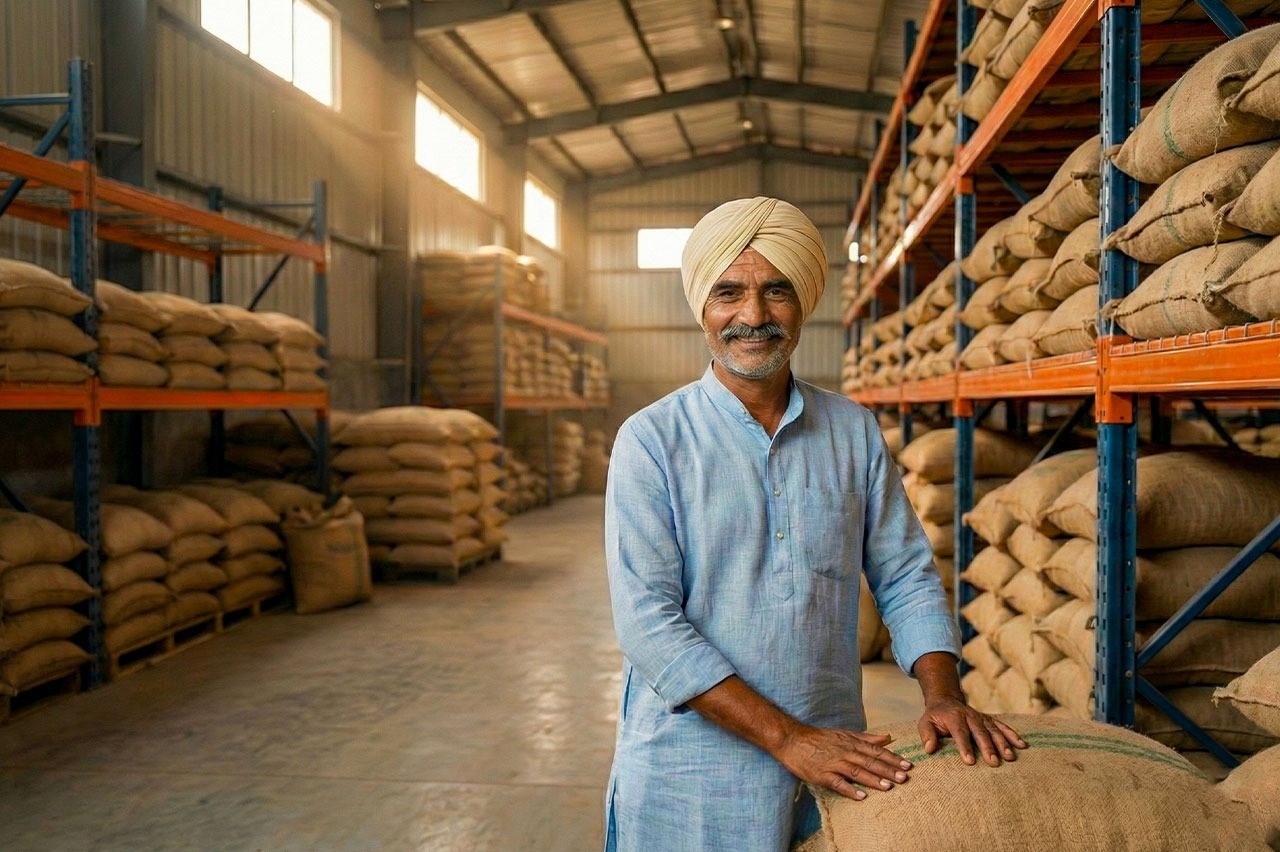
Post-harvest wastage remains a critical issue for the agricultural economy. For commodities, without scientific storage and tracking, they will lose market value. Companies managing warehouses like SLCM provide stability for the system through secure and technologically managed storage facilities. SLCM has over 21,000 warehouses in its network (as on October 2025), managing storage capacity greater than 350 million square feet, so at any time across India, we are able to offer consistency with quality and safety throughout.

Real-time tracking, surveillance, and strong operational controls can help maintain the right conditions within the warehouse. Thus, warehouse management companies can support the integrity of the supply chain and reduce the financial risk for producers and buyers.

Quality Assurance and Traceability

The value of any commodity depends on its quality and condition. Warehouse management systems provide transparency and trust in their transactions. SLCM deploys AI powered quality testing in real-time that provide immediate reports and NABL accredited laboratory support to verify the quality of stock stored in their warehouses. This process empowers farmers with price negotiation, provides pricing transparency, market acceptance, and builds greater confidence in the time of producers and buyers in agricultural supply chain management.

Establishing Financial Empowerment with Collateral Management

Agriculture has a critical demand for timely capital, and when crops are properly stored and tracked accurately, they can become a non-volatile source of collateral. SLCM helps to facilitate access to finance through a digitized storage receipt. A storage receipt issued by SLCM serves as verified proof that the commodity is physically present in the warehouse, allowing it to be used as secure collateral for financing. This provides farmers, aggregators, and traders access to the value of their commodities. Our collateral management services are a critical utility in developing the agri-economy and elevating liquidity wherever needed.

A Network That Connects Access and Scale

India’s agricultural markets are vast and diverse in product. Generating seamless execution involves having the retailer geographically covered with clearly defined processes. With operations across 950-plus mandis and a deep regional infrastructure in access and operations, SLCM fulfills proximity and convenience to the agri-retailer ecosystem.

The Role of Technology in Progress

We have innovation in line with the physical. Smart analytics and digital oversight complete risk forecasting, maximize utility, and enable complete visibility. SLCM operates through a Phygital model, combining physical infrastructure with digital intelligence to deliver better speed, accuracy, and traceability across the agri-value chain. SLCM incorporates technology into agri-logistics and finance with a set of professionalism and responsiveness that distinguishes it as unique. 

The Role of a Strong Agricultural Supply Chain

Supply chains that support a strong agricultural future are resilient, connected, and inclusive. An effective agriculture supply chain management system enables food security, equitable pricing, waste reduction, and enhanced income opportunities. Sustainability solutions support our endeavor to build systems that optimize productivity, thereby enabling growth for a connected and integrated agriculture value chain. Our expertise, infrastructure, and digital capabilities generate trust from the farm gate to the final buyer.

Final Thoughts

The agricultural ecosystem is dynamic, and so is the outlook from each of the participants. Organizations that seek to understand the complete journey of commodities and provide integrated solutions to drive real value to the agriculture ecosystem must exist. SLCM is the unrivaled leader in India, having demonstrated outcomes, operational excellence, driven by a mission to support, uplift, and empower the agricultural economy in India.

Connect With Us

If you are looking for help in storage, procurement, or logistics with a firm that understands this sector really well, SLCM would love to partner with you. Allow us to bring your supply chain together to make your business grow confidently.

Q1. What is agricultural supply chain management?

A1. Agricultural supply chain management refers to the coordinated movement, storage, processing, and delivery of agricultural commodities from the farm to end consumers by maintaining quality and traceability.

Q2. Why is agricultural supply chain management important?

A2. Agricultural supply chain management helps reduce post-harvest losses, improve pricing, support food security, and farmers' and traders' profitability.

Q3. What role do warehouse management companies play in agriculture?

A3. Warehouse management companies provide scientific storage of crops, operational control, and protection of inventory. This is an integral part of maintaining quality and value through the chain.

Q4. In what ways does SLCM help farmers and traders?

A4. Warehouse, quality testing, procurement services, and collateral management services that will provide better market access and economic empowerment.

Q5. In what ways does technology improve the agricultural supply chain?

A5. Digital monitoring, quality checks, AI-based, and data-driven operations improve accuracy, predict risk, and positively impact decision-making.

Q6. Can proper supply chain management facilitate greater financial liquidity?

A6.Yes. Secure warehouse storage and sets of documented inventory can help facilitate financing against stored commodities.

Agricultural Supply Chain Logistics – A Complete Guide

Agricultural Supply Chain

Agriculture in India is not only about crop production; the true pain point arises post-harvest when farmers must store, maintain, conserve, and ultimately sell their product to the right buyer, at the right time, and for the right price. This is where agricultural supply chain logistics comes into play. It is an essential link between production and market that takes the burden off farmers for safe storage, minimizes loss, and ultimately allows for food security. We, as an agri logistics company, at Sohan Lal Commodity Management (SLCM), work every day to ensure the supply chain is more efficient, dependable, and profitable for all stakeholders involved.

Why is Agricultural Supply Chain Logistics Important?

Each year, India produces millions of tonnes of crops. If it weren’t for logistics, a significant amount of supply would be wasted either from poor storage facilities, pests and rodents, thefts, or simply lost days in transit. Agricultural supply chain logistics manages this process, so crops are handled appropriately, stored properly, and delivered promptly.

At SLCM, that is ensuring quality with fumigation and pest management, cocoon fumigation for organic produce, and temperature and humidity control. With the patented solution, Agri Reach, we can manage the life cycle of food grains and perishables at every step. With the right systems, farmers can safeguard the value of their hard work, and consumers can enjoy a quality food experience without interruption. The goal for any agri logistics company will always be to minimize post-harvest losses and build trust across the value chain.

What Problems Are Farmers Facing?

Many farmers face challenges like price volatility, post-harvest losses, and storage inefficiencies, often compounded by unpredictable weather patterns. Classic systems aren’t enough to keep out moisture or pest damage. And many farmers have no choice but to sell at harvest for less than they wanted, because they cannot hold onto their crops. 

This is where the benefit is felt in collateral management and crop financing. With SLCM integrated post-harvest management solutions,  farmers and allied agri stakeholders can use stored crops as collateral to draw loans from banks and financial institutions. This helps to avoid distressed sale situations and allows them to wait for market rates to improve. With a combination of scientific storage capabilities and financial solutions, modern agri logistics puts greater power in farmers’ hands.

How do technology and Phygital solutions help?

At SLCM, logistics is conducted by utilizing Phygital Solutions, a perfect integration of physical structure and digital system. With our widespread warehousing and cold storage facilities, we have advanced monitoring, real-time tracking, AI-powered quality checks, and powerful digital platforms, which ensure efficiency, transparency,and reliability in every process.

Through Phygital warehousing, farmers and traders have instant visibility on stock levels, moisture conditions, and/or temperature, and dispatches. Digital storage receipts and traceability add significant transparency. Technology means that we can provide close visibility on quality and reduce risk. This means that for farmers and traders, they can feel confident that their crops are secure. For an agri logistics company, our Phygital solutions strengthen the overall supply chain and create more efficient systems.

About SLCM

SLCM is the leading agri logistics company providing integrated post-harvest management services around India. SLCM operates over 20,000+ warehouses with 350+ million sq. ft. of storage space as well as 90+ cold storages in the country, assuring scientific, secure, effective storage at a significant scale. In addition to warehousing, the company provides collateral management, procurements, quality testing, and solutions in the digital space, thus increasing transparency and operational efficiencies throughout the value chain. SLCM is rooted in ground realities, and its ecosystem promotes reliability, information for crop financing with institutional partners, and decreased post-harvest loss. SLCM emphasizes innovation and sustainable solutions, while being dedicated to strengthening the agriculture sector, improving productivity in value chains, and enhancing the agri infrastructure in India and around the world, in a resilient manner enabled by technology.

How SLCM Adds Value to Farmers and Traders

Our services are designed with the realities of agriculture in India in mind. With collateral management, farmers can use their stored crops as collateral to access credit. Traders are able to benefit from fast, accurate testing of quality, which allows for the rapid and fair closing of deals. Banks and financial institutions are presented with bankable inventories, supported by the visibility of transparent documents.

Through our Phygital warehousing platform, we give farmers and traders the advantages of physical security and digital visibility. It builds income, reduces waste, and builds trust across the agricultural ecosystem.

The Future of Agricultural Supply Chain Logistics

While the supply of food continues to increase both in India and globally, demand for food is also rising. Meeting that demand will require supply chains to get smarter. In the coming years, agri logistics will need to rely more upon data to inform decision-making based on real-time data, as augmented with blockchain-driven traceability, and increase smart warehousing and management systems.

At SLCM, we believe that combining technology with scale will help agriculture become more sustainable and resilient. The world beyond simply storing crops awaits, as we work toward providing systems that support the efforts of farmers and provide consumers with the best quality produce.

At SLCM, we aspire to improve efficiency, transparency, and profitability within the agriculture sector. If you’re in search of a trusted partner in agri logistics, please connect with us today and see for yourself how we can provide value for your business.

Q1. What services are provided by an agri logistics company?

A1. An agri logistics company manages the storage, testing, transportation, and financing of crops with respect to scientific and digital systems.

Q2. In which ways do agricultural supply chains (logistics) assist farm producers?

A2. Logistics would reduce losses, provide access to credit, and the farm producer would be able to sell at a better price.

Q3. What does phygital mean in place of logistics?

A3. Phygital means the logistics include physical warehouses/cold storage along with the technology of digital logistics, for example, tracking and monitoring equipment.

What India needs Phygital approach in Agri Supply Chain

Agri Supply Chain

India’s food system feeds more than a billion, but sections of its supply chain continue to operate using outdated systems, manual intervention, and lack of visibility. With the industry looking towards modernisation, it’s certain that one thing stands clear: The Agriculture industry doesn’t merely require physical infrastructure or technology — it requires both, to be harmonious.

So, what is ‘Phygital’ in agri supply chains?

It’s the convergence of physical and digital ecosystems. It’s about aligning strong on-ground infrastructure such as warehouses, cold storage, with smart digital tools that introduce transparency, traceability, and efficiency. Imagine it as combining boots on the ground and brains in the cloud.

Why Does It Matters for India? 

Despite being the second-largest agricultural producer globally, India yet struggles with:

  • Post-harvest losses due to inadequate storage
  • Fragmented procurement systems
  • Limited access to credit and real-time data
  • Delayed payments and poor market integration

A Phygital model addresses these challenges head-on:

  • Warehouse Monitoring: Real-time visibility into stock, quality, and location
  • Digital Finance: Linking stored produce to instant credit via digital records
  • Phygital model has transformed stored crops into monetizable assets. Store crops are no longer a passive burden, they become active, tradable and financeable assets, unlocking liquidity and transforming rural finance.
  • Data-Driven Procurement: Better demand forecasting and pricing decisions

The Real Impact

The Phygital approach is already making a difference.
Platforms like Agri Reach have proven how digital monitoring of physical storage can reduce post-harvest losses, increase credit access, and offer farmers a fairer deal.

By creating a bridge between what happens on the ground and what can be tracked, analysed, and improved digitally, a Phygital approach builds trust, ensures speed, and scales sustainability.

The Road Ahead

To a nation with such profound rural traditions and fast-growing digital aspirations, Phygital is not voluntary — it is a necessity. The future of farming will belong to those with the ability to steward both ground and code.

Because in the agri supply chain of the future, success is where physical accuracy and digital smartness meet.

The Story Behind Agri Reach: How SLCM Patented a Post-Harvest Game Changer

In agriculture, the possibility of success does not only increase from what you grow, but how you grow it— it’s about how well you preserve it. 

For years, Indian farmers and agri-stakeholders has been battled a silent various challenges enemy of post harvest management. : post-harvest losses. Crops were grown with care, but once harvested, a large percentage wasted perished due to improper storage, handling, or logistics. This is where SLCM’s Fully Digitized Warehouse Management System, Agri Reach, stepped in — and redefined what was possible.

Agri Reach is a patented, tech-powered solution that infuses post-harvest agri logistics with standardisation and scientific rigour, regardless of place and scale. 

What makes it so revolutionary is that it can replicate the advantage of a licensed warehouse in any warehousing space — be it a rural godown or a decentralised facility.

Essentially, Agri Reach integrates a strong SOP foundation with technology-backed monitoring, quality assurance, and risk management facilities. It equips banks, financial institutions, traders and stakeholders with the confidence that the stored commodity is secure, authenticated, and well-managed.

The FICCI Report statistics speak for themselves: while the industry average post-harvest loss is at around 10%, SLCM has managed to bring this down to as little as 0.5% through the use of the Agri Reach model.

But innovation did not end there. SLCM took it one step ahead and patented Agri Reach — becoming one of the only Indian agri-logistics players with a patented post-harvest solution.

This is not a technological victory alone. It was a declaration — that post-harvest excellence is important, and that Indian innovation can address ingrained issues in agriculture of any country.

Presently, Agri Reach keeps innovating the storage, valuation, and guarding of commodities. It introduces clarity, dependability, and assurance in an industry long based on risk.

AI in Agri Risk Management: Reducing Losses through Precision Interventions

AI in Agri Risk Management

Agriculture is one of the most essential sectors in the world, and yet it is also one of those sectors that are most threatened by risks, especially as far as crop production, storage, and transportation go. Poor storage, inappropriate handling, and inefficiency in the supply chain cause quality loss, which subsequently harms the products and their dependent livelihoods.

The Food and Agriculture Organization reports that a third of all food produced worldwide is lost or wasted every year, with most losses taking place after harvest. Losses of this nature do not only affect the farmer’s livelihood but also exacerbate hunger and put more pressure on the planet’s natural resources. This brings to light the need for intervention and change to minimize such losses.

What is Post-Harvest Losses?

Post-harvest losses arise between the time of harvesting and when the produce eventually reaches the consumer. These are usually caused by a wide range of factors and affect all parts of the agriculture supply chain.

Farmers face certain challenges with their produce like improper & delayed quality checks, poor storage conditions, logistical challenges and market inefficiencies. These challenges create significant financial losses across the agri-supply chain. However, artificial intelligence (AI) is transforming how we address these issues, especially in agri warehousing, providing a chance to solve these persistent challenges.

The Benefits of AI-Driven Interventions

Integrating AI into post-harvest risk management yields numerous benefits, both for SLCM and the entire agricultural value chain:

  • Reduction in Losses: AI’s precision allows for early detection of potential risks, significantly reducing spoilage and wastage. By enabling smarter decision-making, SLCM helps stakeholders across the supply chain avoid unnecessary losses.
  • Cost Efficiency: By optimizing storage, logistics, and market strategies, AI reduces resource wastage and operational costs for farmers, traders, and warehouses. SLCM has implemented these technologies to drive cost savings and improve efficiency at every step of the supply chain.
  • Sustainability: Precision interventions, such as AI-driven storage management, reduce the environmental footprint of agriculture. By curbing excessive use of resources like, energy, and chemicals, SLCM is helping make agriculture more sustainable.
  • Enhanced Profitability: By ensuring that more produce reaches the market in optimal condition, SLCM supports farmers and traders in increasing profitability. AI-driven insights and efficient operations help maximize the value of agricultural products.

Innovations in the Sector

We, at SLCM, constantly develop integrated systems of predictive analytics, IoT, and ERP that ensure seamless and efficient supply chains. Our AI-powered warehouse management systems adjust dynamically to fluctuations in environmental conditions, traffic, and commodity consumption patterns for the best possible quality of agricultural products, reducing waste and maximizing profitability.

These innovations are therefore cost-reducing, rather empowering farmers, traders, among other stakeholders, with relevant tools and technologies to maximize their operations. SLCM is creating a gap between traditional methods of agriculture and the actual future of agri-supply chains by integrating highly advanced AI technologies.

Conclusion

AI has ushered in an era of precision in agriculture by providing transformative solutions to problems that have plagued humankind for centuries: post-harvest losses. SLCM is pioneering new ways to improve the efficiency and sustainability of the agri-supply chain, from AI-based quality checks to predictive analytics for storage and market intelligence.

We are going to see further change in agriculture with AI and will develop smarter and more sustainable agricultural practices as we move into the future. SLCM remains committed to driving innovation for farmers, traders, and the overall agri-ecosystem, preparing them to thrive in an increasingly digital world.

Agriculture supply chain management refers to the process of managing the movement of agricultural products from farms to consumers. It includes activities such as harvesting, storage, transportation, warehousing, processing, and distribution while maintaining quality and traceability.

Effective agriculture supply chain management helps reduce post-harvest losses by improving storage, transportation, and inventory management. Technologies such as AI, IoT sensors, and warehouse monitoring systems allow real-time tracking of crops and help maintain quality during storage and transit.

AI enhances agriculture supply chain management by analyzing data from weather patterns, soil sensors, and market trends to predict demand, optimize logistics, and manage resources efficiently. These insights help farmers and agribusinesses make better decisions and reduce operational risks.