

Blog

How AI-Powered Quality Testing Is Transforming Post-Harvest Management

How AI-Powered Quality Testing Is Transforming Post-Harvest Management

Intoduction

Getting a crop out of the field is only half the job. What happens between harvest and market decides how much a farmer actually earns, and that is where post-harvest management comes in.

One step still slows it down: quality testing. Farmers wait for a manual check of a small sample, often travel and pay to get it tested, and then accept a grade they can’t easily verify. The same lot can be graded differently by two people, which can mean a lower price, a delayed payment and an argument with no proof either way.

AI-powered quality testing changes this. By analysing a photo of the grain sample, it replaces a slow, subjective check with one that is instant, consistent and backed by evidence. In this blog, we’ll look at why quality testing matters in post-harvest management, how AI makes it more reliable, how it works in practice, and who benefits.

The Role of Quality Testing in Post-Harvest Management

Quality assessment is one of the most important checkpoints in the post-harvest journey. Before produce moves from the farm to storage, and again before it is sold, someone has to decide what the lot is actually worth. That grade drives the price, the payment terms, and whether a bank will lend against the stock.

Traditionally, this has been done by hand. Samples are drawn manually, run through sieves, weighed on scales, or sent to a lab. Each step takes time and money, and it often means moving the produce or the sample from one place to another just to get a result.

The bigger issue is subjectivity. Manual grading depends on the person doing it, so the same lot can get different grades from different people. That leaves room for disagreement, and in some cases for middleman bias, where the assessment leans in favour of the party with more power in the deal.

The effects carry down the chain. Delays in grading hold up pricing, which holds up payment, which in turn slows down financing. A check that should be a simple step ends up becoming a bottleneck for farmers, traders, warehouses and lenders alike.

How AI and Machine Learning Are Strengthening Quality Testing in Post-Harvest Management

Image-based quality analysis is simpler than it sounds. A photo of the sample is taken, and an AI model studies it the way a trained grader would, but without personal judgement or bias. It looks at each grain in the image, picks out the differences, and turns what it sees into a quality report in real time.

The result is then compared against a large backend dataset of graded samples. Because that dataset keeps growing, the system becomes more accurate over time instead of staying fixed at one level.

This is what makes the difference in post-harvest management:

  • Unbiased: The grade no longer depends on who is holding the sample or how they feel that day. The same sample gets the same result every time.
  • Faster: What used to take hours or days, including the trip to a lab, is now done in moments.
  • Real-time: The report is available the moment the sample is analysed, so decisions on selling, storing or financing can be made right away.
  • Empowering for farmers: With an objective report in their own hands, farmers no longer have to depend on someone else’s assessment. They can check their produce for themselves, understand what it is worth and negotiate with confidence.

How the Agri Reach App Brings AI into Post-Harvest Management (Step by Step)

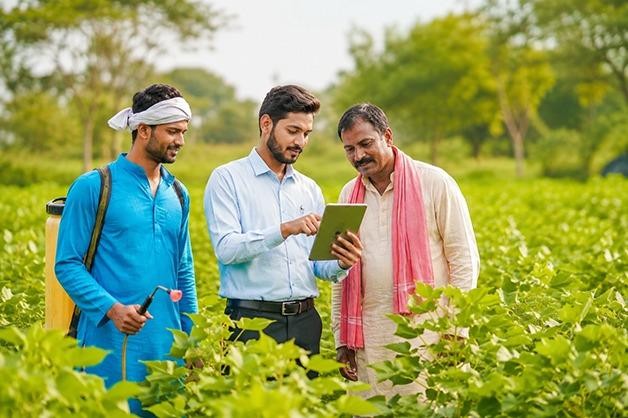
Agri Reach puts this technology in the hands of anyone with a smartphone. Getting a quality report takes three steps:

  1. Take a photo of the grain sample.
  2. Submit it in the app.
  3. Receive an instant quality report in real time.

The report covers the parameters that matter most for grading. For wheat, these are:

  • Moisture
  • Foreign matter
  • Immature and shrivelled grains
  • Weevilled grains
  • Infestation
  • Admixture or other edible grains
  • Damaged and discoloured grains

Each report also carries the captured photo next to an annotated version that marks what the AI picked out, so the result can be checked by eye.

There is no special equipment to buy and no technical skill needed. The app is built for regular smartphone users, including farmers in rural India, so a grade that once meant a trip to a lab can now be had on the spot.

The results can also be trusted. Agri Reach holds an NABL certificate for wheat, and it has tested other commodities too, including Rice and Maize.

Why Instant, Transparent Reports Matter for Post-Harvest Decisions

A quality report is only useful if it arrives in time to act on, and if everyone involved can trust it. Instant, photo-backed reports do both.

  • Right quality, right price: When the grade is accurate and consistent, the price reflects what the produce is actually worth, so farmers are paid for the quality they grew.
  • Evidence that reduces disputes: Every report is tied to a photo of the sample, which gives buyers and sellers a clear record to refer back to instead of arguing over a verbal grade.
  • Faster decisions: Farmers can decide where and when to sell, traders can close deals sooner, and warehouses and lenders can move without waiting on a lab result.
  • No middleman bias: With an objective report in hand, farmers no longer have to rely on someone else’s assessment. Traders get direct access to verified quality, and farmers gain the confidence to negotiate their price.

Who Benefits from AI-Driven Post-Harvest Quality Testing?

AI-driven quality testing helps everyone along the post-harvest chain:

  • Farmers: Get a fair, verifiable grade on the spot, without travel, long waits or reliance on someone else’s judgement.
  • Traders: Can buy with confidence, using an objective report to compare lots and close deals faster.
  • Aggregators: Can check quality across many small lots quickly and consistently before pooling them.
  • Processors: Know what they are sourcing before it arrives, which cuts rejections and wastage.
  • Banks and financial institutions: Get photo-backed quality evidence to support lending decisions on stored produce, with lower risk.

What Makes SLCM's Approach to Post-Harvest Management Different

Plenty of tools can analyse an image. What sets SLCM apart is that quality testing is one part of a wider post-harvest system.

Agri Reach is the first mobile app to receive NABL accreditation for quality testing, which means its reports carry credibility that goes beyond a quick estimate.

SLCM follows a phygital approach, combining digital tools with a strong physical presence on the ground. The app doesn’t replace warehouses, people or processes. It makes them more visible, measurable and accountable.

It also sits inside a larger digitised ecosystem that includes warehousing, collateral management and agri financing. Quality, storage, security and financing are connected in one place, so a quality report can feed straight into the next step, whether that’s storing the produce, securing it or raising finance against it.

The Future of AI in Post-Harvest Management

AI-powered quality testing is only the starting point. Here is where post-harvest management is heading:

  • More commodities: AI-enabled testing will expand beyond wheat, rice and maize to cover a wider range of crops, so more farmers and traders can use it.
  • Connected systems: Integration with IoT, sensors, surveillance and warehouse management systems will link quality data with what is happening inside the warehouse.
  • Predictive analytics: Instead of only reporting current quality, systems will flag early signs of deterioration and storage risks, so action can be taken before losses occur.
  • Intelligent, real-time management: Together, these steps point toward a post-harvest chain that is monitored in real time and responds to problems as they arise.

The goal stays the same: a post-harvest process that is more transparent, more efficient and fairer to the farmers at its centre.

What is post-harvest management?

Post-harvest management covers everything that happens to a crop between harvest and sale, including quality testing, storage, security and financing. Getting each step right protects the value of the produce and helps farmers earn a fair price.

The quality grade decides the price, the payment and whether a lender will finance the stock. Traditional manual checks are slow, costly and subjective, so the same lot can be graded differently by different people. That leads to delays and disputes.

A photo of the grain sample is analysed by an AI model, which checks parameters such as damaged, shrunken, shrivelled or immature grains, foreign matter, colour, length and pattern. The results are benchmarked against a backend dataset that keeps improving over time.

Farmers get a fair, verifiable grade on the spot. Traders, aggregators and processors can source with confidence, and banks and financial institutions get photo-backed evidence to support lending decisions.

It can be. NABL-certified testing is available for wheat, and other commodities such as rice and maize have also been tested. Every report is backed by a photo of the sample, which gives buyers, sellers and lenders a clear record to rely on.
Agri Financial Services: Empowering Farmers and Agri Businesses with Smarter Financial Solutions   

Agri Financial Services: Empowering Farmers and Agri Businesses with Smarter Financial Solutions

Why Agri Financial Services Are Essential

The agricultural value chain involves more than just cultivation and harvesting. From procurement to storage to processing to distribution, every part of the value chain depends on getting financial support on time and handling commodities correctly. That’s why Agri Financial Services play an important role in this process, providing the connection between financing and successfully managed agricultural operations.

At SLCM, we achieve this by using a comprehensive approach that combines services of scientific warehousing with collateral management, commodity management, financing and providing services of procurement, transportation, processing and distribution. By combining all these services into one structure, we create a system that allows moving and maintaining the commodities in the agricultural value chain.

SLCM's Integrated Approach to Agri Financial Services

At SLCM, Agri Financial Services are part of an integrated agri value chain rather than a standalone offering. We have developed our service as a combination of various processes, robust SOPs, taking advantage of warehousing science, commodity management, collateral management, and agriculture financing.

Agri financing is closely related to secure storage, receipt management, and organization of commodity management processes. The approach we are employing in our work allows one to make sure that the process of commodity management is organized, and the financing needs are fulfilled at any stage of the chain.

How Kissandhan Supports Agri Financial Services

Kissandhan is a Non-Banking Financial Company regulated by the Reserve Bank of India and is part of the SLCM Group. It serves the agricultural sector by providing financing solutions using the agricultural commodities stored in approved warehouses as collateral.

Kissandhan’s goal is to enable its customers to improve the agricultural supply chain through competitive financing solutions designed for farmers and agricultural businesses. The commodity-backed financing offered here collaborates with the competency in warehousing and commodity management within the SLCM Group to complete the financing cycle of operations.

Commodity-Backed Financing Through Collateral Management

One of the core services of SLCM is its Collateral Management, which leads to effective financing of agriculture. The commodities stored at SLCM warehouses serve as the collateral to Storage Receipt Financing.

The services offered by us include warehouse receipt management, monitoring of commodities, audit, provision of security services, and commodity quality management. These services ensure proper management of commodities throughout the storage period. Thus, Agri Financial Services is assisted with proper collateral management, which provides transparency and consistency in commodity-backed financing.

Risk Management and Quality Assurance Support Agri Financial Services

In addition to storage, commodity management also plays a key role in ensuring reliable financing. Under SLCM’s Agri Financial Services, commodities are monitored to ensure their quality and state of condition.

Through its various services, SLCM provides insurance support, commodity inspections, warehouse surveillance, internal audits, and quality testing. The risk management system uses Standard Operating Procedures; and includes audit inspections, and methodologies supported by using SAP technology, and real-time reporting.

Quality testing services also consist of AI/ML powered commodity check & real-time reporting, moisture relevance tests, fumigation inspections, physical inspections, and state of health assessments of commodities. Other activities include the use of NABL-accredited Analytical Central Laboratory for quality testing using sophisticated analytical devices.

Integrated Agri Financial Services for the Agricultural Value Chain

At SLCM, we use an integrated approach toward agricultural financing that incorporates scientific warehousing, collateral management, quality assurance, and risk management in agriculture. These connected services enhance agricultural finance services by connecting funding to the secure storage of commodities and managing commodities properly. This strategy is part of our integrated agri value chain and it provides assistance in movement and management of goods through different stages of agriculture. If you are in search of complete solutions combining financing and managing commodities, you can rely on SLCM in order to provide help with your business needs. Connect with us today!

What does the term Agri Financial Services refer to?

Agri Financial Services are connected to the agricultural finance sector and in addition, scientific warehousing, management of collateral, and management of commodities.

SLCM is involved in agricultural financing by means of scientific warehousing, management of collateral, financing through warehouse receipts, and management of commodities.

The Collateral Management function is responsible for enabling financing in terms of warehouse receipts, commodity monitoring, auditing, security, and management of the quality of commodity.

SLCM ensures the quality of the commodity by providing insurance support, inspection of commodities, monitoring of warehouses and performing internal audits and testing of quality.

SLCM goes for financing linked to scientific warehousing and collateral management as well as management of commodities in order to aid the agricultural value chain.

How SLCM Delivers Reliable Agri Warehousing Services in India with Technology-Driven Solutions

How SLCM Delivers Reliable Agri Warehousing Services in India with Technology-Driven Solutions

The Evolving Need for Agriculture Warehousing Services in India

We often assume that agriculture ends once the crops are harvested. Once crops are harvested, they should be stored properly to maintain their quality. However, an efficient Warehousing Services in India will also help to improve a crop’s market value. A local storage company can help you maintain the quality of your grain until it is sold. The appropriate storage will decrease loss, maintain quality, and ensure there is no interruption in the agricultural supply chain.

Unfortunately, the majority of standard warehousing processes have gaps and are unable to deliver the required service. First, the lack of any standardization can impede the transparency that must be maintained. Secondly, inadequate oversight of quality control can lead to loss of merchant and farmers confidence in the quality of their products on the market.

Sohan Lal Commodity Management’s progress on addressing these gaps through a systematic and phygital approach has provided tangible and reliable solutions that assist in instilling real confidence into both farmers and merchants in their commodity at every level of the supply chain. Our goal is to provide farmers and merchants with true visibility and control at every stage of the storage process.

Integrated Warehousing with Pan-India Reach

Our comprehensive warehousing services go beyond storage to provide total support for the entire post-harvest life cycle of the commodity, from the time the commodity enters the warehouse until the time it is dispatched. Our operation spans across the country, enabling us to service any agricultural commodity in a uniform manner. This allows us to combine high volume with consistency in delivery. We integrate warehousing with broader agri supply chain processes to ensure efficient and seamless operations across locations.

Phygital -Driven Warehouse and Risk Management Systems

Our Warehousing Services in India are managed by a phygital approach that integrates physical operations with technology.  We use Phygital Platforms for commodity tracking, warehouse operations, reporting and managing risk at each stage of commodity management. The Agri Reach application will enhance this process as well. It has been built to be operational regardless of the types of infrastructure, commodities and/or weather dynamics that may exist. Having real-time visibility allows for stakeholders to remain clear about the operation of the warehouse and the delivery of products to the customers while simultaneously having it incorporated with risk monitoring so that issues can be identified and managed early in the procurement process. This reduces the reliance on human labor for monitoring and increases the accuracy of the information.

Scientific Storage with Standardised Processes

Discipline and best practice are essential to maintaining the quality of a commodity. Scientific storage techniques provide a means to preserve value during the storage period. The quality of commodities is monitored regularly through inspection and grading. Across all of our warehouses, fumigation, pest management , moisture control, round-the-clock surveillance with CCTV cameras and GPS-enabled locks and proper stacking practice are consistently applied.

What makes us unique is our adoption of uniformity in all of our warehouses. Each warehouse follows the same procedure so that the result is the same, no matter where the commodity is stored. Over time, this level of uniformity provides a great deal of reliability.

Collateral Management and Financial Enablement

A warehouse should not only serve as a storage location for goods. A warehouse can also assist you with the process of obtaining funding through collateral management services. Our business model is integrated and provides collateral management services that help to release value from the commodities that you have stored.

The commodities that you have stored can be used to attract funding as an alternative source of liquidity when you need them. By doing this, it will alleviate your need to sell at inappropriate times because of a lack of liquidity.

Our processes are both field-proven and transparent; they provide confidence to the financial institutions that are interested in using warehousing as a mechanism to provide financial support. Thus, warehousing provides not only operational support but also financial support.

Setting New Standards for Warehousing Services in India

The integration of technology, scientific storage methods, and standardized risk management processes into one system gives Sohan Lal Commodity Management the capability to provide Warehousing Services in India that are reliable, transparent, and scalable. Due to growth within the agricultural sector, there will be a corresponding increase in the need for reliable warehousing service as well. Consistent execution and continuous improvement are our foundation.

If you are looking for an organization that knows how to manage commodities with precision while providing superior service, we are here to support you with your warehousing needs. Visit our website today!

What makes Sohan Lal Commodity Management’s warehousing services reliable?

The integration of technology, scientific storage, and standardization promotes reliability and consistency.

Technology allows for real time tracking, reduces human error, and improves monitoring and reporting.

Agri Reach provides warehouse management capabilities for various types of commodities across geographies under a unified system.

Farmers/Traders are able to use stored commodities as collateral for financial services, which provides them with an added level of liquidity and flexibility.

Yes! We manage commodities consistently through every location across India.

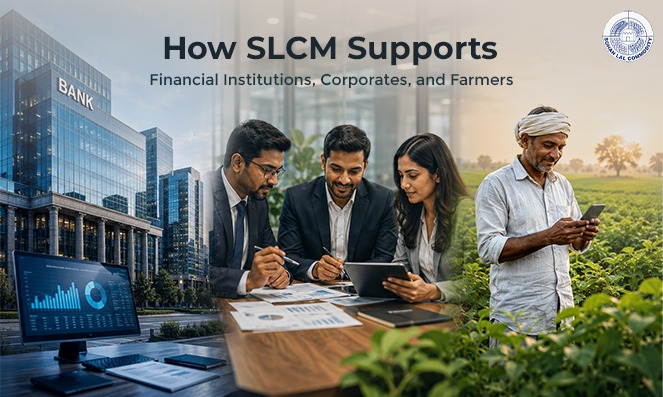
How SLCM Supports Financial Institutions, Corporates, and Farmers

How SLCM Supports Financial Institutions, Corporates, and Farmers.

Why End-to-End Warehouse Solutions Matter

The post-harvest agricultural sector of India struggles with issues such as inadequate storage, commodity loss, unreliable monitoring, and price fluctuation. Due to a lack of effective warehousing systems, fragmented storage is limiting agricultural commodities’ quality and access to organized financing. The provision of integrated Warehouse Solutions would subsequently enhance all agricultural value chain processes: efficiency, transparency, and operational trust.

Sohan Lal Commodity Management Limited plays an important role in supporting India’s agricultural supply chain through its wide post-harvest agri-logistics network. The company helps store and manage a variety of agricultural commodities with care by using scientific warehousing practices and technology-enabled monitoring systems. Our strong warehousing and cold storage infrastructure is designed to help maintain product quality, improve efficiency, and support smooth movement of goods across the supply chain.

End-to-End Commodity Management Across the Value Chain

SLCM has one cohesive operational system that manages all processes associated with procurement, storing, tracking, and quality control of commodities, management of collateral, movement of commodities, reducing gaps, and increasing consistency in the operation of its warehouses.

By implementing scientific storage techniques, including management of moisture content, application of fumigants, efficient stacking, and monitoring via surveillance cameras and GPS-enabled e-locks with periodic inspections, preserves quality and quantity of commodities during storage. The use of standard operating procedures by all warehouses establishes operational discipline and ensures safe handling of commodities.

SLCM’s proprietary Agri Reach platform provides visibility and monitoring of operations in warehouses. The Real Time Data Management Method allows for the centralised monitoring and management of commodities across all warehouses through the use of a common interface, while the Real Time Quality Control Data Monitoring Method allows for the real-time monitoring of quality throughout warehouse operations. The Agri Reach Application allows for both quality verification in real-time and operational monitoring at warehouse sites throughout the warehouse network.

The use of these disciplined operational procedures and technology-based systems has resulted in a reduction in post-harvest losses from nearly 10% to approximately 0.5% through scientific monitoring and warehouse control procedures. (FICCI Report)

Strengthening Agri Financing Through Collateral Management Systems

SLCM supports banks and financial institutions through structured collateral management services supported by scientific warehousing practices. Commodities stored in professionally managed warehouses act as secured collateral, helping lenders make financing decisions with greater confidence while maintaining better visibility into pledged inventory.

To maintain the quality and safety of stored commodities, SLCM follows well-defined quality control and warehouse monitoring processes. Scientific storage methods, digital inventory tracking, regular audits, and surveillance-based monitoring systems help ensure that commodities remain compliant with defined standards throughout the storage period. Warehouse receipts also provide lenders with verified records of stored commodities, improving transparency and accountability in agri financing.

With disciplined operational processes and strong risk management practices, SLCM continues to support leading financial institutions across India as a trusted warehousing and collateral management partner. Its transparent monitoring systems and structured warehouse operations help reduce storage-related risks while improving operational confidence for lenders and commodity stakeholders.

Support for Farmers

Farmers uses trusted and reliable storage systems that keep them from selling their produce in distress and will provide them with the ability to negotiate for higher prices for their goods. Warehousing in this fashion will also help to eliminate avoidable losses and will create better income longevity.

With SLCM’s integrated systems, agricultural producers gain greater visibility of their products, greater protection of their produce, and greater access to structured storage support provided in the agricultural regions in which they operate.

Technology-Driven Warehouse Solutions

SLCM’s integrated Warehouse Solutions are supported by advanced digital inventory systems, AI-based quality monitoring tools, and real-time reporting mechanisms that improve warehouse visibility, operational control, and overall efficiency.

These integrated Warehouse Solutions enhance cooperation, increase reporting accuracy, and improve the overall level of coordination across the agricultural supply chain.

Risk Management and Quality Assurance

SLCM has established a framework of strategic quality assurance and risk management practices that act as a guideline for the warehouse network. Regular audits, surveillance systems, quality inspections, and monitoring processes allow for operational accuracy and commodity safety.

SLCM delivers real-time quality checks, operational monitoring, and enhanced compliance accuracy through the use of Agri Reach application technology with our warehouse operations.

SLCM maintains and enhances India’s post-harvest ecosystem for farmers, corporates, and financial institutions through technology-driven operations and scientific storage, along with our disciplined warehouse practices.

SLCM provides an integrated warehouse solution that enhances the transparency, security, and efficiency of commodity management through the entire agricultural value chain.

Connect with SLCM today for reliable commodity storage, monitoring, and agri logistics support backed by technology driven systems and scientific processes.

How does SLCM assist farmers after the crop is harvested?

SLCM offers scientific storage to decrease loss and decrease the need to sell at a distressed price level.

SLCM uses its Agri Reach patented technologies as well as AI-based quality monitoring systems in its warehouses.

It improves funding transparency by way of verified monitoring, conducting audits, and providing storage receipts.

It supports the retention of the crop’s commodity quality while reducing loss and improving storage efficiency.

Beneficiaries include farmers, corporates, processors, traders, and Lenders.

Challenges in Agricultural Storage and How SLCM Solves Them Effectively.

Challenges in Agricultural Storage and How SLCM Solves Them Effectively.

Introduction to Storage in Agriculture

Efficient storage in agriculture is vital for maintaining the quality and quantity of commodities, decreasing losses after harvest, and enhancing the stability of supply chains. Many agricultural commodities continue to experience storage problems that result from inconsistent methods of handling items, inadequate monitoring, and unorganised processes for managing warehouses.

Sohan Lal Commodity Management is one of India’s leading providers of agricultural logistics and warehouse management services. Since 2009, SLCM has been operating a significant warehouse network across India and Myanmar. We provide warehouse management, collateral management, procurement assistance, and agri financing product solutions using technology driven operations.

Major Challenges in Agricultural Storage

Agriculture suffers from numerous issues when it comes to warehouse management such as lack of scientific warehouse management practices. Due to poor handling, exposure to moisture, pest infestation, theft, vandalism and inconsistent monitoring of sites, the quality of commodities in storage and transit is badly affected.

Not having equal access to organized warehouse management services creates inefficiencies in operations for farmers, financial institutions and stakeholders. Many parts of agriculture have limited or no available tools for tracking systems or visibility of the quality of their products. Whenever these inefficiencies continue over time they create declining conditions of commodities, decreased buyer confidence, and financial loss.

The inefficient storage in agriculture force most farmers into selling their commodities sometime immediately following harvest instead of having access to a properly and professionally managed warehouse system.

Impact of Inefficient Storage

Poor storage practices contribute to commodity loss, disrupt the supply chain and create distrust between buyer and lender. Also, the lack of visibility in tracking and proper quality monitoring creates risks throughout the agricultural value chain.

SLCM’s Scientific Storage Approach

SLCM has addressed these issues through the use of a scientific warehouse management system and a standardised operating procedure to manage commodities. SLCM’s scientific storage method employs appropriate methods of handling, stacking, fumigating, managing moisture, conducting inspections, and implementing surveillance systems to ensure the integrity of the commodity remains intact throughout the storage process.

With the technology-enabled warehouse management system, SLCM employs operational visibility, accountability, and decision making can be enhanced in the managed warehouse network. Further, SLCM provides farmers with improved price negotiation power due to better commodity management and market visibility.

Technology-Enabled Storage Management

Modern storage in agriculture relies heavily on technology. In order to improve the accuracy and transparency of its warehouse management operations, SLCM provides instant digital inventory tracking, AI-based quality monitoring tools, automated audit process, and real time reporting systems.

With its patented Agri Reach technologies, SLCM is able to provide a real-time view of all warehouse operations through an integrated system. This also allows for quality checks and operational visibility, thereby eliminating manual errors in the warehouse operations.

Risk and Quality Management

SLCM’s warehouse management practices employ structured risk and quality management solutions. Inspections, pest management, fumigating, moisture control management, audits and monitoring all positively impact the successful management of products and limit risk associated with their operation.

Supporting Collateral Management and Financing

SLCM offers multiple types of collateral management services that allow lenders to use stored commodities as collateral to secure a loan. Verified commodity quality checks, inventory tracking and receipts all help to build confidence and transparency with lenders.

SLCM continues to build upon India’s post-harvest management ecosystem through scientific warehouse management, technology-enabled processes and commodity management programs.

To learn more how SLCM’s scientific processes provide reliable warehousing, agri-logistics and commodity management solutions contact SLCM.

What are the benefits of storing commodities?

Proper storage of commodities helps in maintaining commodity integrity and reducing post-harvest loss.

Commodity quality can drop due to pest infestation, moisture, theft, improper handling and inadequate monitoring.

SLCM uses scientific warehouse management systems and technology enabled monitoring processes.

SLCM leverages Agri Reach technology for digital tracking technologies, auditing processes, and AI based quality assurance systems to manage commodities.

Lenders can use stored commodities as collateral on loans.