
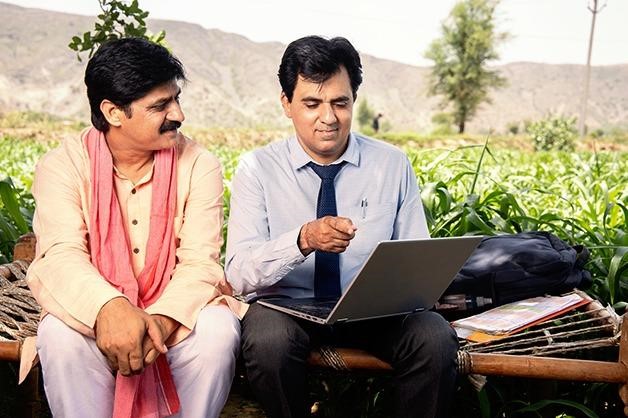
In agriculture, the journey does not end at harvest. Farmer income depends on many factors, including the quality of food grains, market prices, weather conditions, and other real-world influences beyond their control. Across India, a large share of agricultural loss happens after the crop has already been harvested. In many cases, the commodity leaves the field in good condition, but once it is moved into substandard storage, quality starts to drop. Moisture in the air, pests, and uneven or rough handling slowly affect the commodity. These issues are not always obvious at the start, but over time they reduce value and limit market options. This is why the storage of agricultural commodities becomes so important after harvest.
A key reason for these losses is that storage in agriculture has often been fragmented or inconsistent. When storage conditions are not checked regularly, even small changes in moisture or temperature can quietly damage the commodity and lead to avoidable losses. As a result, farmers and organisations working at the grassroots level are often forced to sell early, even when prices are not favourable.
About Sohan Lal Commodity Management Limited
Sohan Lal Commodity Management Limited, commonly known as SLCM, has dedicated its mission to strengthening post-harvest management across various geographies. Over the years, the company has focused on bringing structure, discipline, and transparency to how agricultural commodities are stored and managed after harvest. SLCM’s role goes beyond providing warehouse space. The focus is on ensuring that commodities are stored in a controlled and well-managed environment so that quality is protected and losses are reduced.
Storage Designed for Agricultural Commodities
At SLCM, storage and warehouse management are designed to be flexible and agnostic to commodity, weather, and geography, making it possible to store a wide range of agricultural products across different regions without difficulty. After harvest, every commodity reacts differently. Some may be highly sensitive to moisture, while others may require better temperature control or careful handling. Because of these variations, SLCM follows scientific storage practices that match the specific needs of each commodity.
Good storage practices help avoid many common problems such as insect infestation, moisture buildup, and gradual damage that can occur when commodities are not stored properly. This includes keeping warehouses clean, maintaining proper airflow, carrying out regular quality checks, and ensuring careful handling at every stage. When these simple but consistent practices are followed, agricultural commodities are able to retain their quality and stay in good condition for a longer time.
Bringing Better Control into Storage Operations
One of the long-standing challenges in storage in agriculture has been limited visibility. When storage conditions are not checked often enough especially before inward of the commodities, small issues can remain unnoticed and slowly cause damage.
To address this, SLCM keeps a close watch on storage conditions, commodity movement, and inspection schedules across its facilities. This helps bring better control to the Storage of Agricultural Produce. When changes are noticed early, action can be taken in time, before the commodity quality is affected. Over a period, this reduces uncertainty and improves reliability in storage operations.
Maintaining Quality through Regular Checks
Quality does not stay consistent on its own. It needs regular attention. At SLCM, commodities are checked at different stages while they are in storage. These checks help ensure that storage conditions remain suitable and that quality standards are being followed.
Along with inspections, Standard Operating Procedures (SOPs) help reduce risks associated with handling and storage. This approach strengthens storage in agriculture by preventing small issues from turning into major losses. Post-harvest loss is reduced utilizing physical and scientifically-based methods of storage, with protocols that are consistent for storage around the world, utilizing technology to monitor and control storage conditions, and ultimately to monitor and manage the level of quality assurance of individual products stored in warehouses. The patented Agri Reach tool developed by SLCM provides Risk management, Real time Tracking, Auditing, and Digital Warehouse Management to reduce losses from 10% to 0.5% or less based on the validation of FICCI.
Allowing Better Decisions after Harvest
Reliable storage creates flexibility. When Storage of Agricultural produce is dependable, stakeholders are not forced to rush their decisions immediately after harvest. Commodities can be stored safely while waiting for better market conditions.
SLCM supports this flexibility by offering professionally managed storage environments that allow better planning. This reduces the need to sell in a hurry and gives stakeholders more control over when their commodities are sold.
Strengthening the Post-Harvest Ecosystem
Improved storage for agricultural products helps everyone involved in the agricultural supply chain by providing a better end product with fewer losses and therefore more consistent quality as well as smoother movement of commodities through the supply chain. Supporting and encouraging storage systems to operate effectively ultimately reduces the burden of other areas of the value chain due to improved efficiencies within those systems.
By using consistent processes and daily operations, SLCM supports advancement of Post-Harvest Management. Over time, this builds confidence in how agricultural commodities are stored and handled after harvest.
Work With SLCM for Reliable Commodity Storage
If reducing post-harvest loss is important to your operations, SLCM offers storage solutions built around experience, consistency, and scientific practices. Work with us to protect commodity quality and strengthen post-harvest outcomes through better storage systems.